
Zainium OS
An independent, enterprise-grade Linux operating system — built from scratch and immutable by design. Its core stays intact whatever you install, upgrades apply atomically, and software for musl and glibc runs side by side.
A computer that doesn't break.
Most operating systems mix the system and the software you install in the same place, so one bad package or one failed update can leave a machine that no longer starts. Zainium OS keeps its core apart from everything else and never lets it change half-way.
Behind it are the Zainium Principles: ten rules for building an operating system that people and organizations can depend on.

Creator of Zainium OS · Founder of Zainium Dynamics
A base that never breaks
There is no /usr, /etc or /bin at the root. The whole operating system lives under /overlayer, in layers with one owner each.
- syshub is the base: built from scratch, changed only by verified, atomic base upgrades.
- Apps live in zexlib, stacked on top with OverlayFS — installing or removing software never touches syshub.
- elevate blocks rm, mv and cp on the base, even for root.
- If something goes wrong, boot the base on its own — it always starts.
No /usr, /etc or /bin at the root — the whole OS lives in /overlayer
musl at the core, glibc when you need it
The base is built against musl. glibc installs as a package into its own directory, so prebuilt software — commercial apps, games, vendor SDKs — runs next to the musl base without touching it.
- gcc, ldd and the headers stay musl's; glibc has its own x86_64-zainium-linux-gnu-gcc.
- Both read the same users, DNS and time zone from the system's etc.
- Binaries built on other distributions start through the right loader automatically.
Installing glibc and its toolchain next to the musl base
One package manager, no dependency hell
zex installs Zainium's own signed .zex packages first. When a package is not there, it can take it from Void Linux, Alpine Linux or Chimera Linux and adapt it to Zainium's paths.
- A dependency resolver checks every package and every shared library before anything is installed — missing libraries come from the repository that provides that exact version.
- No half-installed packages: if a dependency can't be satisfied, zex tells you before it changes anything.
- Never replaces a file of the base; records every file it installs, so removal is exact.
- Flatpak and the COSMIC Store for desktop applications.
zex search: Zainium, Void, Alpine and Chimera in one query
Upgrades that apply at boot
Base upgrades are downloaded, verified and staged while you work. quantra-ramfs, the initramfs, applies them at the next boot — before anything uses the base — so the running system never sees a half-upgraded base.
- The last applied upgrade can be rolled back at the next boot.
- Every step is journaled; an interrupted upgrade recovers on its own.
- A rolling release: install once and keep it current with zex update.
quantra-ramfs applies staged base upgrades at boot, behind the splash
Enterprise-grade security
Even root cannot change a single byte of the base. On an installed system every base file is sealed with fs-verity, and the kernel itself refuses to rewrite it — for root too, and even when the disk is mounted directly. elevate replaces sudo and refuses rm, mv, cp, rsync, shred and unlink on the base, the boot files and a staged upgrade.
- Kernel lockdown, AppArmor profiles, Landlock, Yama and IPE from the first boot; every kernel module is signed.
- The base changes only through verified base upgrades, sealed as they are applied.
- Signed packages: Ed25519 and BLAKE3 for .zex, the upstream schemes for every other source.
- Every install, removal and upgrade is journaled and can be rolled back.
fs-verity: even as root, the kernel refuses to change a single byte of a base file
The Dualayer Hierarchy Standard
Zainium's layout is published as an open specification, the Dualayer Hierarchy Standard (DHS): a layered filesystem hierarchy in which musl and glibc run side by side. Any distribution can implement it.
Only /overlayer, user data and the virtual filesystems. There is no /usr, /etc, /bin, /lib, /lib64 or /boot — not even as links.
- Standard
- Dualayer Hierarchy Standard 1.0
Screenshots
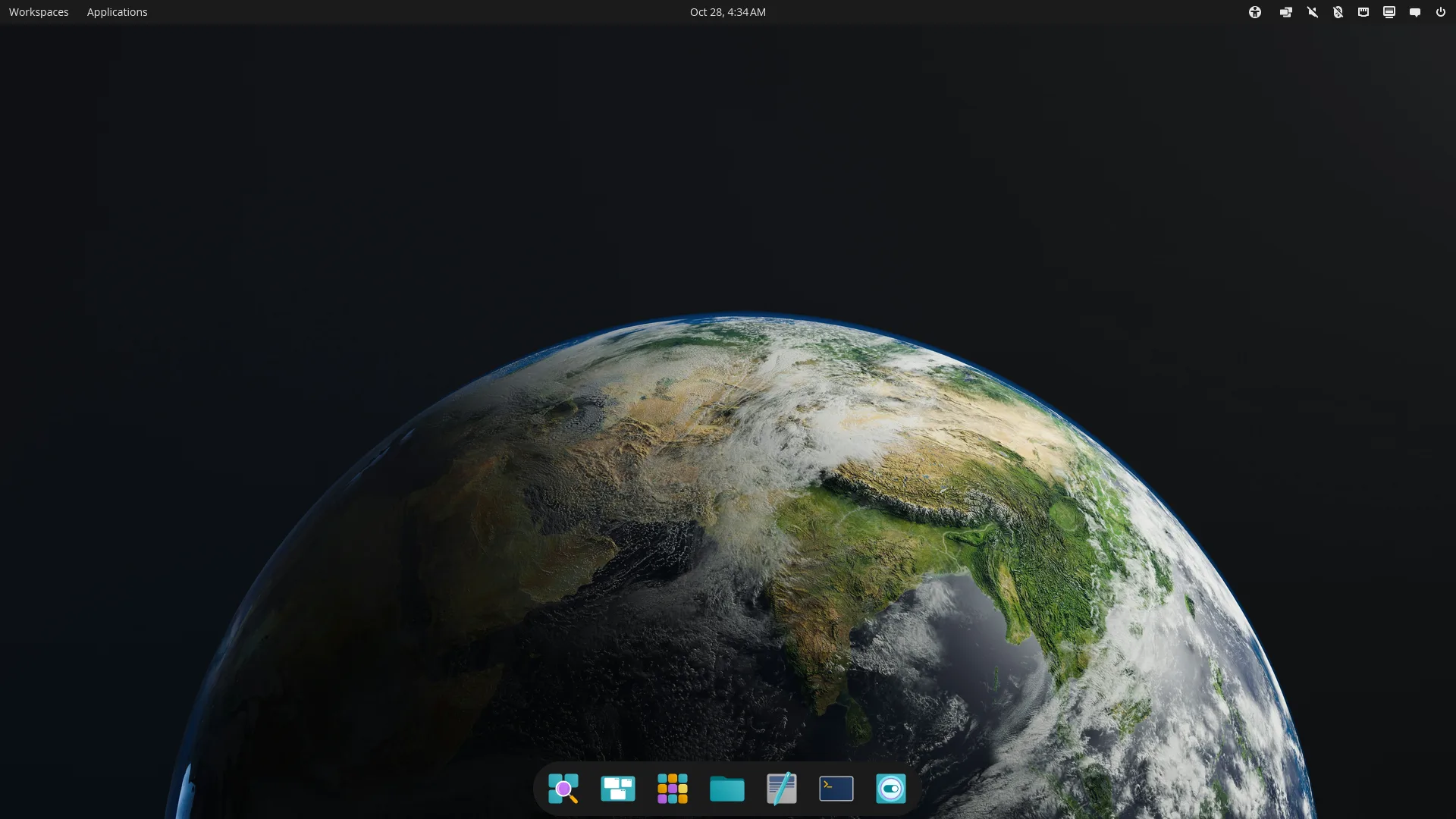
Taken on the live ISO. Click any of them to see it full size.
News
Updates of the rolling release.
Sponsors
Zainium OS has no sponsors yet. Help keep an independent operating system independent — and be the first name here.
Build it with us
Zainium OS is developed in the open. Read the code, report issues, write recipes for new packages, or help shape the Dualayer Hierarchy Standard.